

Boo casino Plinko game
Introduction
Plinko at Boo casino is one of those rare casino games that looks almost too simple at first glance. There is no reel set, no payline map, no dense bonus menu, and no long learning curve. You choose a stake, set the level of risk, drop a ball from the top of the board, and watch it bounce through a field of pegs until it lands in a payout slot. That is the entire visual idea. Yet in practice, Plinko creates a very specific kind of tension that many players do not fully expect before the first session.
I find that this is exactly why Boo casino Plinko deserves a closer look. The interface is minimal, but the experience is not. The game can feel calm, almost casual, when the settings are conservative. Change the board setup or raise the risk level, and the same screen starts producing a much sharper emotional swing between frequent small returns and rare high multipliers. That contrast is the real core of Plinko.
For players in Canada who want to understand whether this format is actually worth trying, the important question is not simply “is Plinko popular?” The better question is what the game really offers in a live session: how the ball movement relates to probability, how the pace affects decision-making, where the risk actually sits, and why this format feels very different from both classic slots and Boo Casino roulette details before claiming bonuses or depositing. In this review, I will stay focused on that practical side.
What Boo casino Plinko is and why it attracts so much attention
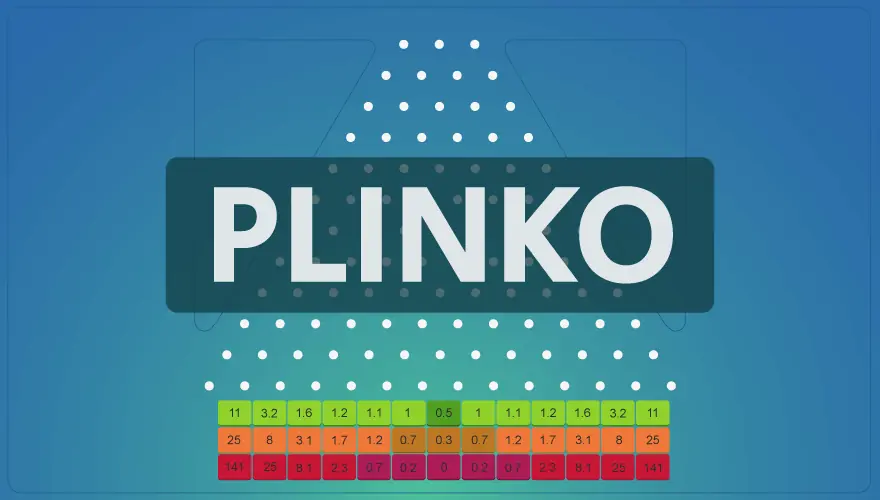
Plinko is a probability-driven drop game built around a vertical board filled with pins. Each round starts with a single ball released from the top. As it falls, it collides with pegs and changes direction many times before landing in one of several slots at the bottom. Every slot corresponds to a multiplier. Some are low and appear more often, while the highest ones are positioned where landing is much less common.
The reason the format stands out is easy to understand once you watch a few rounds. The action is immediate, visual, and transparent on the surface. You do not need to decode symbols or follow multi-step bonus logic. You see the ball, you see the route, and you see the result. That directness gives Plinko a kind of clarity that many other casino games do not have.
But the attention around Plinko is not only about simplicity. It is also about contrast. The board looks playful, almost harmless, yet the outcomes can vary sharply depending on the chosen settings. A low-risk session may produce many modest returns and a relatively stable balance curve. A high-risk session can generate long stretches of low outcomes followed by an occasional multiplier that changes the picture completely. In other words, the game is simple to read visually, but not simple in how it feels over time.
One observation I keep coming back to is this: Plinko often gives players a stronger sense of “watching probability happen” than slots do. Even though the result is still random, the bouncing path creates an illusion of narrative. That visual journey is part of the appeal, and it is also one reason players can become emotionally attached to each drop more quickly than they expect.
How the Plinko mechanic actually works
At Boo casino, the Plinko structure follows the standard logic of the format. Before starting a round, the player usually sets three main variables: the stake, the number of rows, and the risk level. These settings shape the session more than many newcomers realize.
The ball starts at the top of the board and moves downward after each collision with a peg. Every impact sends it slightly left or right. The final destination is one of the multiplier slots along the bottom edge. The central slots tend to appear more often because the ball has more paths leading toward the middle. The outer edges usually hold the larger multipliers, but reaching them is significantly less likely.
That basic structure is important because it explains the full logic of the game. Plinko is not about building combinations. It is about distribution. Most rounds are designed to fall into the more probable zones. The bigger numbers are there to create upside, but they sit in less accessible positions. This is why a screen full of visible multipliers can be misleading if a player does not understand how uneven the real outcome frequency is.
Risk level changes the shape of that distribution. On lower settings, the board is usually configured so that outcomes cluster more tightly around modest multipliers. On higher settings, the spread becomes wider. That means more very low returns or complete misses, balanced by the possibility of a much larger hit. The game does not become more “generous” in a simple sense; it becomes more extreme.
| Setting | What it changes | What it means in practice |
|---|---|---|
| Stake size | Value of each drop | Directly affects bankroll pressure and session length |
| Rows | Depth of the board and number of bounce decisions | Can alter pacing, distribution feel, and the route complexity of each drop |
| Risk level | How outcomes are distributed across multipliers | Changes the balance between frequent small returns and rare large ones |
Another detail worth understanding is that the ball path is not a skill mechanic. Players sometimes feel tempted to believe that releasing the ball from a certain point gives them control. In reality, Plinko is a chance-based casino game. The visual drop is part of the presentation, not a reliable way to outplay the system. That does not make the game less interesting, but it does matter for expectations.
Where the game’s rhythm comes from and how it feels in a real session
The pace of Boo casino Plinko is one of its defining traits. A round resolves quickly. There is no slow symbol reveal and no waiting for a feature to build over several spins. You place the drop, watch the descent, and see the multiplier almost immediately. This creates a fast feedback loop, and that loop has a major effect on player behavior.
In practical terms, Plinko can feel lighter than a slot during the first few minutes because the rules are so easy to follow. But that same accessibility often leads to more rapid decision-making. Players tend to adjust stake size, row count, or risk level on impulse because the result arrives so quickly. That is one of the hidden pressure points of the format.
The rhythm also depends heavily on what the player is looking for. If the goal is steady entertainment with moderate swings, lower-risk settings can produce a smoother session. There may still be losses, of course, but the pattern often feels less jagged. If the goal is chasing larger multipliers, the tempo becomes more psychologically demanding because many drops may resolve with underwhelming outcomes before anything notable happens.
This is where Plinko becomes more interesting than its appearance suggests. The board itself does not change much, yet the emotional texture of the session changes dramatically with one setting adjustment. I would describe that as one of the game’s most distinctive strengths. A simple interface can support very different play styles, but the trade-off is that inexperienced players can move into a much harsher variance profile without fully noticing it.
A second observation that separates Plinko from more typical casino formats: the suspense happens during the fall, not after it. In slots, anticipation often builds around the possibility of a bonus trigger or reel stop. In Plinko, the tension is compressed into a few seconds of visible movement. That makes each round feel self-contained and immediate.
How risky Plinko really is and who is likely to enjoy it
Plinko can be relatively mild or aggressively swingy depending on the selected configuration. That is the first thing a player should understand before launching a session at Boo casino. It is not enough to say that the game is “high risk” or “low risk” in general. The format is adjustable, and the chosen setup determines the character of the session.
At low risk, Plinko may suit players who prefer frequent feedback and dislike long periods of complete dead time. The returns are often modest, but the session can feel more active and less punishing in the short term. This does not mean the game becomes safe in any absolute sense. It only means the outcome spread is narrower.
At medium or high risk, the experience changes considerably. The player is accepting a wider gap between ordinary results and top-end multipliers. That can be exciting, especially for those who enjoy volatility and do not mind many underwhelming rounds. But it can also drain a bankroll faster than the clean design suggests.
In my view, Plinko is best suited to players who enjoy short, discrete rounds and understand that visible motion does not equal strategic control. It can also appeal to those who want a break from feature-heavy slots and prefer a more stripped-back form of chance-based entertainment. On the other hand, players who need narrative progression, themed presentation, or layered bonus structure may find Plinko too bare after the novelty fades.
- Good fit: players who like fast rounds, clear rules, and adjustable session intensity.
- Less suitable: players who want deep bonus systems, strong thematic immersion, or a slower pace with more decision weight per round.
What to understand about probabilities, outcomes, and session expectations
The biggest practical mistake in Plinko is focusing too much on the highest visible multipliers. They attract attention for obvious reasons, but they are not representative of what most rounds will do. The board is built around probability concentration. Central landing zones are generally more common, while the edges are where the rare outcomes live. That asymmetry is the whole economic engine of the game.
For the player, this means session expectations matter more than any single drop. A few rounds can create a very distorted impression. A lucky early hit may make the board seem more generous than it is. A cold stretch may make it seem broken or unfair. Neither reaction is especially useful. Plinko should be read over a larger sample because its logic is distribution-based, not event-based.
Another important point is that “frequent returns” and “profitable session” are not the same thing. On lower-risk settings, many drops may still return less than the original stake. That can create the feeling of constant action without necessarily preserving the balance. Players who only look at how often something lands may miss the more important question: what is the net effect over time?
This is the third observation that often gets overlooked: Plinko can feel more transparent than it actually is. You can see the board, the pegs, and the landing slots, so the system appears easy to read. But the emotional clarity of the animation is not the same as mathematical simplicity from a bankroll perspective. Fast, visible rounds can hide cumulative loss surprisingly well if the player is not tracking results carefully.
| Session pattern | What a player may feel | What is really happening |
|---|---|---|
| Many small returns | The session seems stable | The balance may still be drifting downward gradually |
| Long dry stretch at high risk | The board feels cold | Wide outcome spread is behaving as expected |
| Rare large multiplier | The game feels suddenly rewarding | A low-probability event has temporarily changed the session result |
How Plinko differs from slots and other mainstream casino games
Compared with classic slots, Plinko is much more minimal in presentation and much more direct in round structure. A slot usually relies on symbols, reel combinations, bonus triggers, current Boo Casino free spins information for online casino players, and layered payout logic. Plinko strips all of that away. One drop leads to one result. The attraction is not thematic immersion but immediate probability drama.
This difference matters because the player mindset is different too. In a slot, many people are waiting for a feature round or a premium symbol connection. In Plinko, there is no such buildup in the same sense. Every round is complete on its own, and the excitement comes from the route of the ball and the multiplier where it lands.
Compared with roulette, Plinko shares the appeal of fast outcomes and visible randomness, but the feel is not the same. Roulette is built around a betting layout and known probability categories. Plinko feels more kinetic and less formal. Compared with crash games, Plinko is usually less about timing decisions and more about accepting a predefined probability structure before the drop begins.
That puts Boo casino Plinko in an unusual middle space. It is simpler than a slot, more visual than many blackjack guide for Boo Casino users, and less decision-heavy than strategy-based formats. For some players, that balance is exactly the point. For others, it may feel too light to hold attention over a long session.
Practical strengths and weak points of Boo casino Plinko
From a player’s perspective, Plinko has several clear advantages. The first is accessibility. You can understand the basic flow almost instantly. The second is pace. Results come quickly, which makes the game easy to sample without committing to a long learning process. The third is flexibility. Risk settings can change the entire character of the session without changing the core interface.
Those strengths are real, but they need to be balanced against the format’s limits. Plinko does not offer much thematic depth. If a player enjoys progression, unlock-style features, or evolving bonus rounds, this game may feel mechanically thin. The same visual simplicity that makes it approachable can also make it repetitive.
There is also a practical downside to the speed. Fast rounds can encourage reactive behavior. A player may increase the risk level after a quiet stretch or raise the stake after a big multiplier because the interface makes every adjustment feel small and immediate. In reality, those changes can alter bankroll exposure very quickly.
I would summarize the main strengths and limitations like this:
- Strengths: clear rules, quick rounds, adjustable intensity, strong visual tension during each drop.
- Limitations: limited depth, potentially deceptive pace, and a higher chance of impulsive setting changes during play.
What to check before starting a Plinko session at Boo casino
Before launching Boo casino Plinko, I recommend paying attention to a few practical details. These are not cosmetic points. They directly affect how the session will feel and how long your bankroll is likely to last.
First, decide what kind of session you actually want. If you are in the mood for steady, low-intensity play, choose settings that reflect that from the start. Do not begin conservatively and then drift upward out of impatience. Plinko often punishes that kind of emotional adjustment because the format moves too fast for casual experimentation to stay harmless. Table game fans will get more out of this review after reading best Boo Casino Aviator crash game page for Canadian players.
Second, look at the risk level as the central setting, not a secondary one. Many players focus on stake size first, but in Plinko the distribution profile is just as important. A small stake on a very aggressive setup can still create a rough session pattern.
Third, use a demo version if it is available. In a game like this, demo play is genuinely useful because it helps you understand the rhythm rather than just the rules. You can feel the difference between low and high risk, see how often modest multipliers appear, and notice how quickly rounds accumulate.
Finally, keep track of the total session result instead of reacting to individual drops. Plinko is built to create memorable moments, especially when a ball approaches an outer slot. Those moments are part of the fun, but they can distract from the bigger picture if you are not measuring the session as a whole.
Final verdict on Boo casino Plinko
Boo casino Plinko offers a very specific casino experience: fast, visually clear, probability-driven, and highly sensitive to risk settings. Its biggest strength is not complexity but contrast. The game looks simple enough for anyone to understand in seconds, yet the actual session can range from calm and repetitive to tense and sharply uneven depending on how the board is configured.
That is why Plinko works well for players who value quick rounds, direct mechanics, and a format that does not bury the action under symbols and bonus layers. It gives immediate feedback, and when the risk level is chosen carefully, it can be an effective alternative to classic slots. At the same time, the game demands caution precisely because it looks so easy. The fast pace, visible ball movement, and adjustable settings can make bankroll pressure less obvious than it really is.
If you want a casino game with straightforward rules and strong moment-to-moment suspense, Plinko is worth trying. If you prefer deeper structure, richer themes, or slower sessions with more strategic texture, another format may suit you better. In short, Boo casino Plinko is not about complexity or storytelling. It is about controlled randomness, rapid outcomes, and the tension of watching a simple drop produce very different results.
FAQ
How does Plinko work with ball drops and multipliers?
A chip is released and falls through a grid of pegs, landing in a scoring slot. Each slot is tied to a multiplier that determines the round result.